
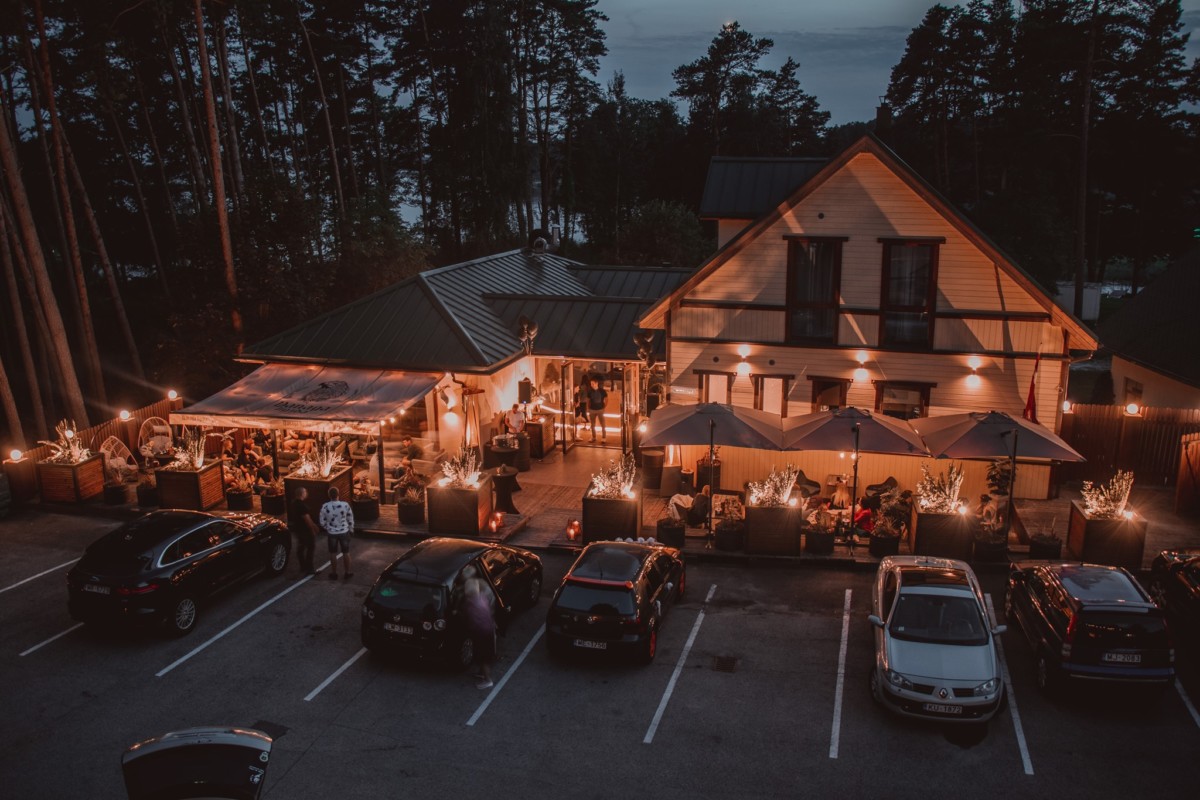
Vanaga Ligzda
Vanaga Ligzda piedāvā trīs dažāda izmēra un rakstura telpas privātiem banketiem un saviesīgiem pasākumiem, kopumā uzņemot līdz 100 viesiem.
Pieejamas:
- Lielā zāle līdz 70 personām ar 138 m² plašu telpu, iekšpagalmu un āra terasi,
- Grillbārs līdz 30 personām ar atvērto grilu un terasi;
- Kamīnzāle līdz 25 personām ar mājīgu atmosfēru un balkonu ar skatu uz ezeru.
Dažādais telpu izkārtojums ļauj izvēlēties pasākuma mērogam un noskaņai atbilstošu vidi, savukārt āra teritorijas un terases sniedz papildu iespējas svinību norisei.
Kāzas
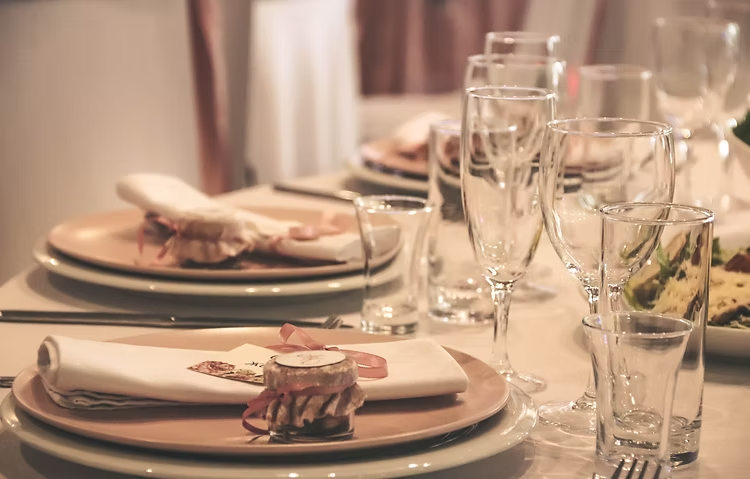
Vanaga Ligzda ir ideāli piemērota vieta kāzu svinēšanai. Mūsu restorāna pavāru veikums apmierinās gan tradicionālu vērtību piekritējus, gan gardēžus. Svinību norisei piedāvājam dažādas telpas – gan Lielo zāli un Grillbāru, kā arī kamīnzāli ar skatu uz Baltezeru. Sadarbībā ar vairākiem pasākumu rīkotājiem, vadītājiem un dekorētājiem atradīsim jums atbilstošājo formātu, un padarīsim jūsu pasākumu atmiņā paliekošu.
Semināri
Šī būs ideāla vieta, kur aizvadīt semināru vai apmācības ārpus pilsētas – prom no ikdienas steigas, mierīgā un privātā atmosfērā. Esot šeit, būs grūti noticēt, ka atrodaties tikai īsa brauciena attālumā no Rīgas centra.
Bieži vien ir svarīgi, lai telpas semināriem būtu viegli pielāgojamas dažādam dalībnieku skaitam un pasākuma mērķim. Mēs nodrošināsim visu nepieciešamo aprīkojumu sekmīga semināra veikšanai – projektors, tāfele, ūdens, papīrs un uzlādējos kafijas pauzes ar uzkodām.

Bēru mielasti
Galvenais bēru mielasta mērķis – izrādīt cieņu aizgājējam, pagodināt viņu ar labu vārdu, atcerēties jaukus momentus saistītus ar aizgājēju, viņa sasniegumus un labos darbus. Bēru mielastam jābūt tradicionālam un pienācīgam, aizvadot aizgājošo.
Mēs organizējam bēru mielastus, lai jums grūtā brīdī nevajadzētu patstāvīgi domāt par tādām lietām kā ēdienkarte, viesu sasēdināšana un par visām tradīcijām, kuras jāievēro. Mēs saprotam, ka šis brīdis ir grūts un apzinamies, ka katra situācija ir induviduāla, līdz ar to esam pretīmnākoši izmaiņām, uzklausot viesu velmes un prasības.
Svinības
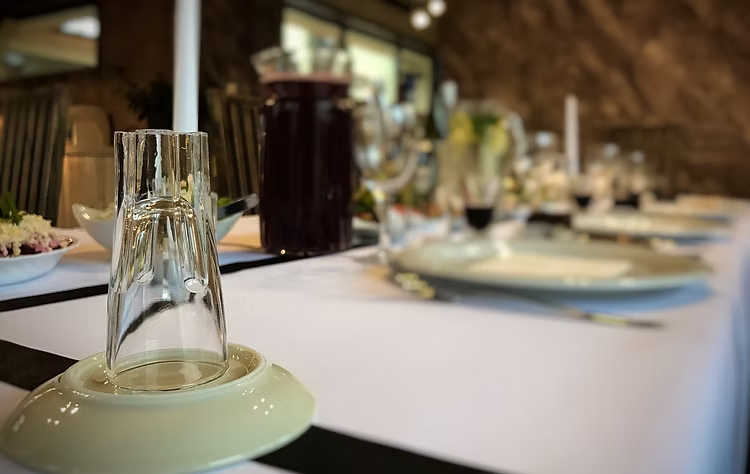
Vienmēr labāk nosvinēt nekā nesvinēt. Dzimšanas dienas, vārda dienas, kāzu jubilejas un citas jubilejas ir pelnījušas, lai tās atzīmētu ar glanci. Un neaizmirstam par bērnu ballītēm! Lielas vai mazas – Vanaga Ligzdā ikkatras svinības atradīs piemērota lieluma telpas un atmosfēru.

Gauja-Baltezers Canal and sluce
At the beginning of the 20th century, Ādaži Parish – in the then Baltic provinces of the Russian Empire and in their areas inhabited by Latvians – was home to two remarkable unique engineering structures – the Gauja-Daugava waterway canals and the Baltezers pumping station. We can be proud of both the engineering development of the time and the work of the people of Ādaži in building these structures. The Gauja-Daugava waterway was a unique system of waterways created to float trees, connecting the Gauja and the Daugava rivers. Previously, intensive floating of trees from the timber extraction areas in Vidzeme to Riga took place along the Gauja, and the last section from the mouth of the Gauja in Carnikava to the mouth of the Daugava – along the Gulf of Riga. This was the most expensive and the most dangerous. Rafts used to break up in the waves. And sometimes we had to wait weeks for the sea to calm down to get the timber to the ports. On the Daugava, too, they had to be hauled upstream for long distances to the sawmills in Mīlgrāvis. In order to avoid such unwieldy transport of timber by sea, the idea of connecting the Gauja and the Daugava was revived in the minds of entrepreneurs. The idea was actually very old, dating back to the 17th century, when it became popular in many parts of the world to create canals for shipping and transporting goods by connecting natural reservoirs. To realise this goal, the Vidzeme Waterways Improvement Company was established, which from 1899 to 1903 developed and implemented the unique Gauja-Daugava waterway project.
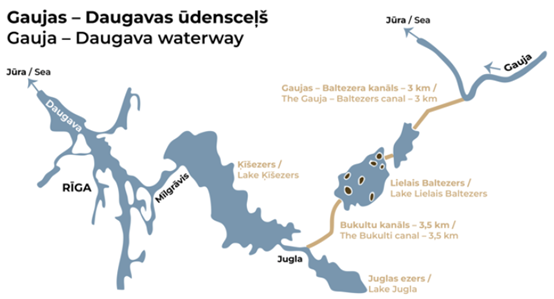
The waterway was 22.3 km long and connected the two rivers. The canal started in Ādaži near Remberģi (now the village of Strautkalni), and continued along the 3.1 km long artificially constructed Gauja-Baltezers Canal until the water flowed into the Lake Mazais Baltezers near Alderi. There was a lock in the middle of the canal. The locks were fitted with a Stoney gate. This shutter could be moved up and down, and its shield moved on ball bearings of a special design to make it easy to move. According to English canal researcher M. Clarke, this was the only time ball bearings were used instead of roller bearings in the widely used Stoney system.
The Gauja-Baltezers Canal was used for rafting only in spring, when the water level in the Gauja was at its highest. The 100 m stretch of the canal downstream of the locks was constructed with wooden boards, as were the walls at the mouth of the canal into the Baltezers. The rest of the section downstream of the locks and the whole section upstream of the locks were reinforced with fascines (bundles of branches tied in a cylindrical shape) or turf. The Gauja-Daugava waterway continued from the Lake Mazais Baltezers through the Lielais Baltezers, and from there, through a 3,5 km long channel and the bed of the Jugla River, the water reached the Ķīšezers and finally, crossing the Ķīšezers and the Mīlgrāvis estuary, reached the Daugava River.
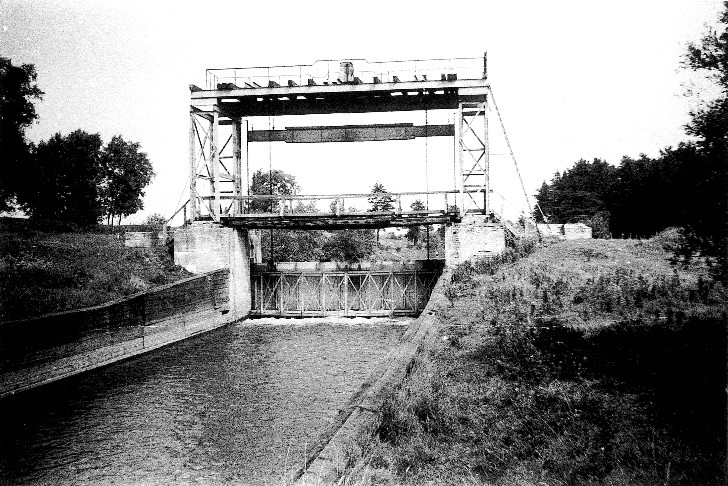
1954. year. The sluice
In the middle of the three-kilometre-long canal, there was a mighty lock that regulated the water level in the lower part of the canal. They were sometimes used to clear log jams by storing water and then rapidly releasing it over the log jam
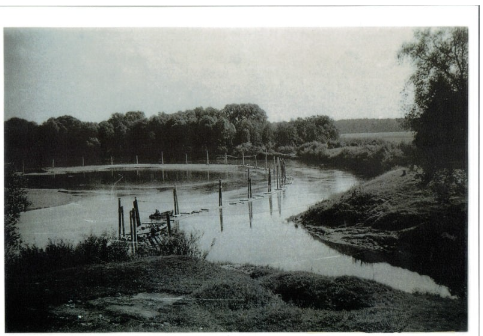
1954. year. Canal entry device
As the waters of the Gauja are allowed free passage to the sea, rafts and logs get diverted into the canal to Lake Mazais Baltezers.
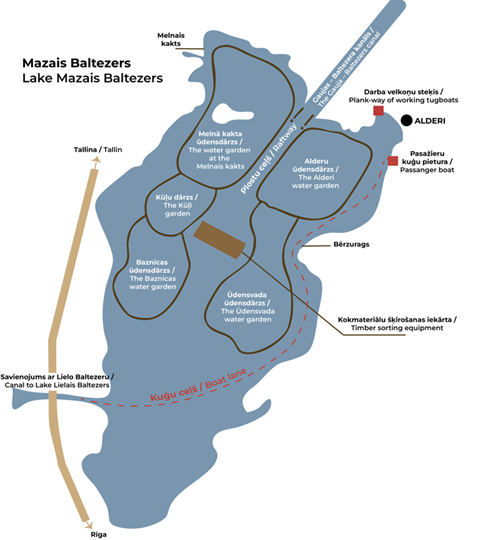
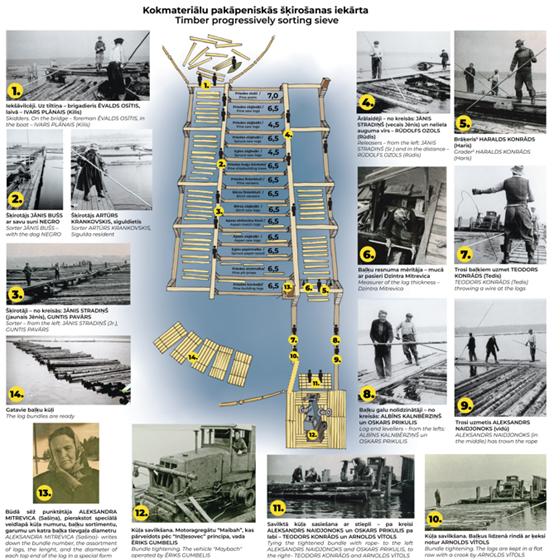
At the lower end of the Gauja-Baltezers Canal, the stream coming from the Gauja ends. Further on, rafts and logs were transported to Riga by tugboats. The rafts were pulled from the mouth of the canal into the lake and tied in the middle of the lake, where they were then towed to Riga – to sawmills, veneer factories and the port. The loose floating logs ended up in water gardens. These enclosure-like gardens were created by attaching single-log sledges to piles. (Log strings are connected by chains and clamps.) The free-floating logs in water gardens were replaced in the 20th century by a series of “log huts”. In the first half of the 20th century, the logs were put into snake rafts, which were also towed by tugboats to Riga. In 1950, a timber sorting plant was built in the Lake Lielais Baltezers. All the logs were sorted into different grades, measured and – with a tractor on the raft – pulled into bundles, which were tied with thick wires by the plankers (tree floaters working in the water gardens). The bundles were made into rejas (2-row caravans of bundles), which were also towed to Riga.
The canal was used by about 1000 rafts a year, and in 1911 by 2522 rafts [ibid]. During the season, the wood rafters had to coordinate their work with the Riga barges, which used the Gauja-Daugava Canal to transport coal from the harbour to the Baltezers pumping station built nearby in 1904 to power the engines there. The Alderi area was very busy at the end of the 19th century and the beginning of the 20th century. A village of tree floaters with its own special history and traditions developed along the canal at Alderi. Due to its magnificent natural scenery, the canal in the Gauja area and the two Baltezers lakes, it was a popular recreational destination for tourists and holidaymakers in 1920s and 30s Latvia. This is evidenced by numerous publications in the press.
The logs flooded into Lake Baltezers were deposited in water gardens – a part of the lake enclosed by piles and rags – which could hold up to 200 000 cubic metres of logs. In the water gardens, the timber was sorted, felted (joined) and sown in bundles to be towed to Riga by the river shipping tugboat via the Lake Lielais Baltezers and Ķīšezers. There were four water gardens in Mazais Baltezers – Alderi, Melnā kakta (‘Black Corner’), Baznīcas (‘Church’) and Ūdensvada (‘Waterline’). After 1950, when a mechanised tree felling plant was built, the bundles tied there were placed in the bundle water garden. In the middle of these water gardens stood a timber grading plant and a flailing unit.

HIDEAWAY
HIDEAWAY is a little valley of paradise on the shores of a small Baltezers lake.
The concept blends gourmet specialties with local, seasonal dishes, using the freshest, locally-sourced ingredients to create a unique and delightful dining experience.
This is a picturesque holiday complex for you and your family.
Working hours (off season period) :
Wed/ Thu/ Fri : 16.00- 22.00
Sat: 12.00-23.00
Sun: 11.00-21.00
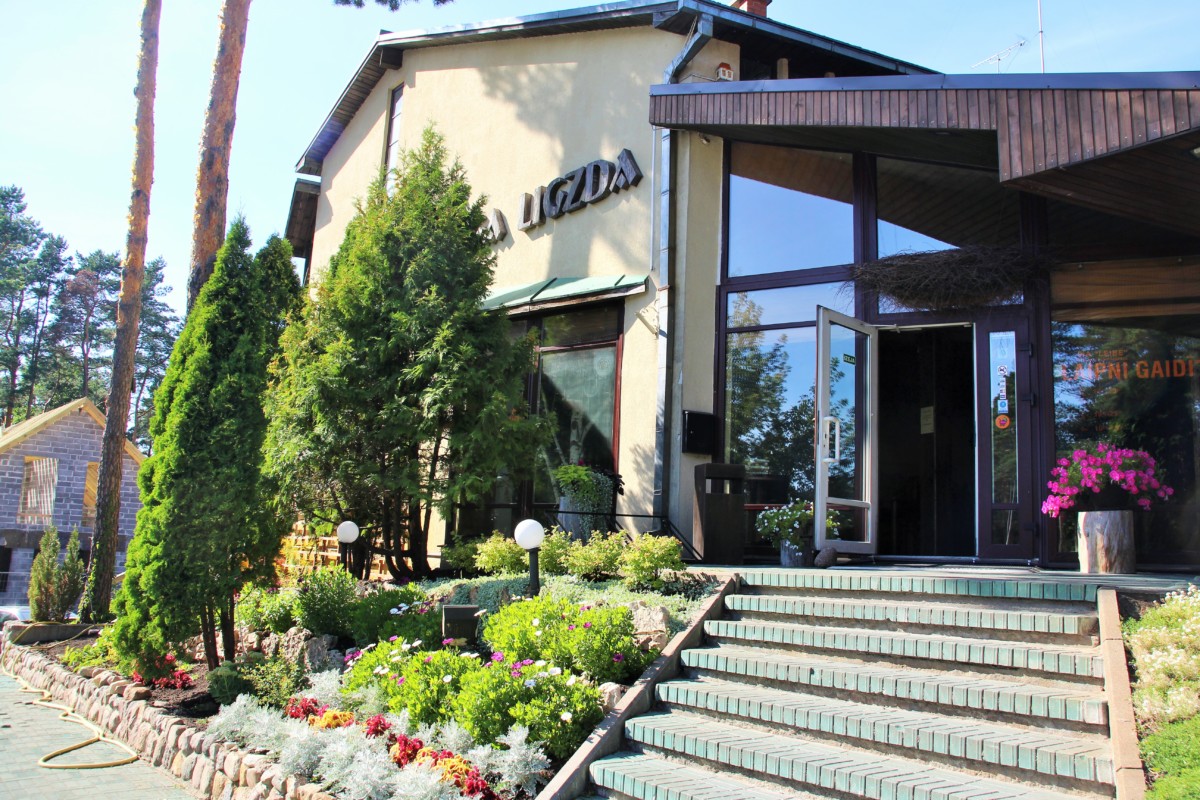
Vanaga ligzda
The Vanaga Ligzda has been open for nine years and can be easily found in Baltezers, on the left side of the Riga – Tallinn highway.
Offers:
- Delicious food;
- Overnight in a homestay;
- Sauna and hot tub;
- Children’s playground;
- Party table setting;
- Takeaway food ordering;
- Packed lunch on weekdays.
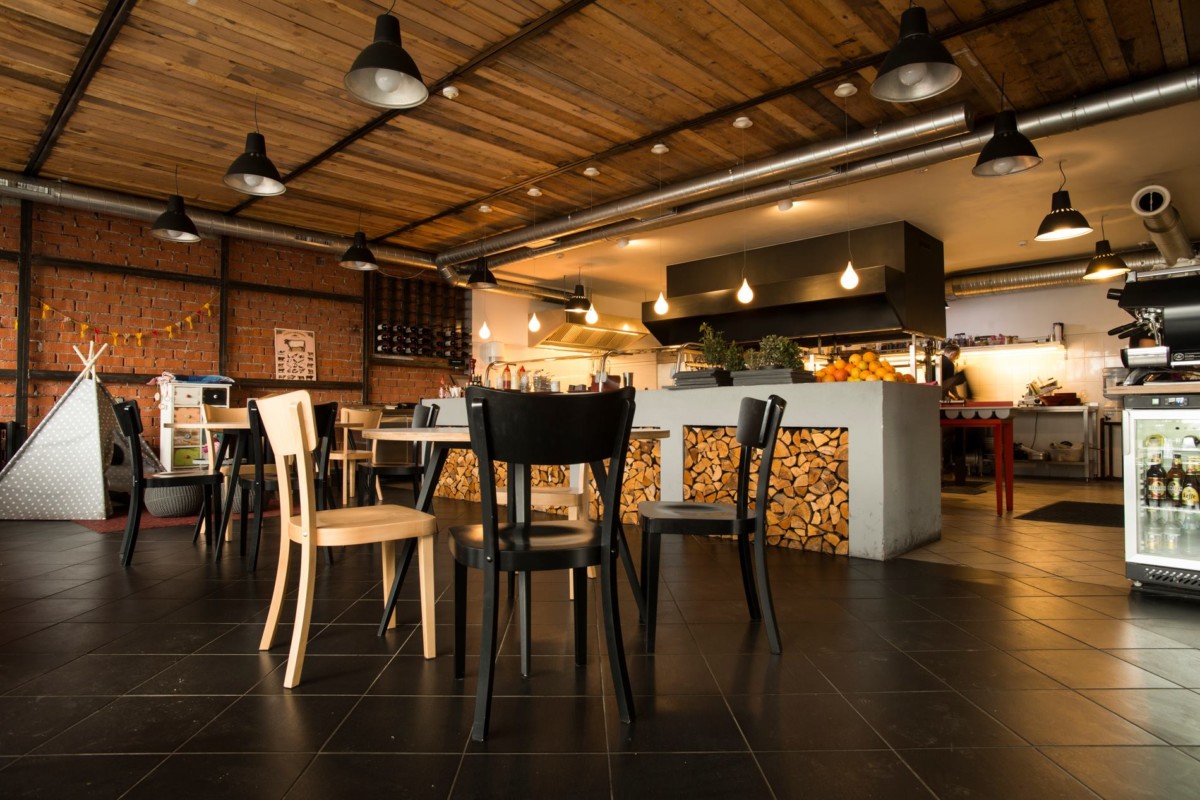
Chicken Chops Steaks
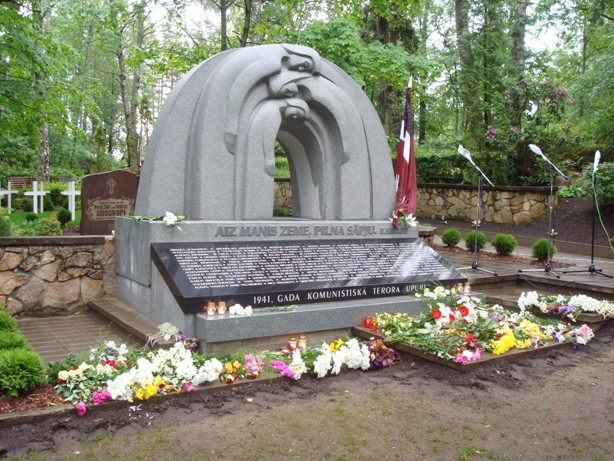
Memorial to the Victims of Communist Terror
In the old part of the Baltezers Cemetery, a brethren cemetery with the informal name “White Crosses” in a 15×45 m sized area. According to various information, 113-130 victims of the brutal Soviet NKVD service, also known as the Cheka, killed in June and July 1941 are buried there, reburied in the autumn of 1941 from the place where they were initially buried in a mass grave near Baltezers Lake. It is believed that the victims were buried in rows of 10, thus forming 11-13 rows. Almost none of them have survived to this day. Although some sources claim that the victims were shot on the lake shore or in a nearby summer house, the more plausible scenario is that they were executed in Riga Central Prison and then taken to Baltezers.
Originally (1942-1944) there was a common cross and an individual memorial for each burial (a wooden cross and a wooden plaque with the name and personal details on it). When the second Soviet occupation started in 1944, the wooden crosses gradually perished and many weren’t restored. To mark the graves, the victims’ relatives installed crosses of various types and materials from the old part of Baltezers Cemetery. In the 1980s, a memorial marker in permanent material (granite, concrete, wood) was installed. Reconstruction works and the last reconstruction of the memorial to the victims of communist terror took place in 1994-1995.
In 2006, the Ādaži Municipality Council announced a tender for the creation of a monument at the Baltezers Cemetery and a memorial to the victims of communist terror in Soviet-occupied Latvia 1940-1941. The winner of the competition was the project “Gate” by sculptor Vija Dzintare and architect Irēna Rubauskas. To complete the construction of the monument and the landscaping of the memorial, the project “The Gate of Sorrow” was implemented under the “Europe for Citizens” programme.
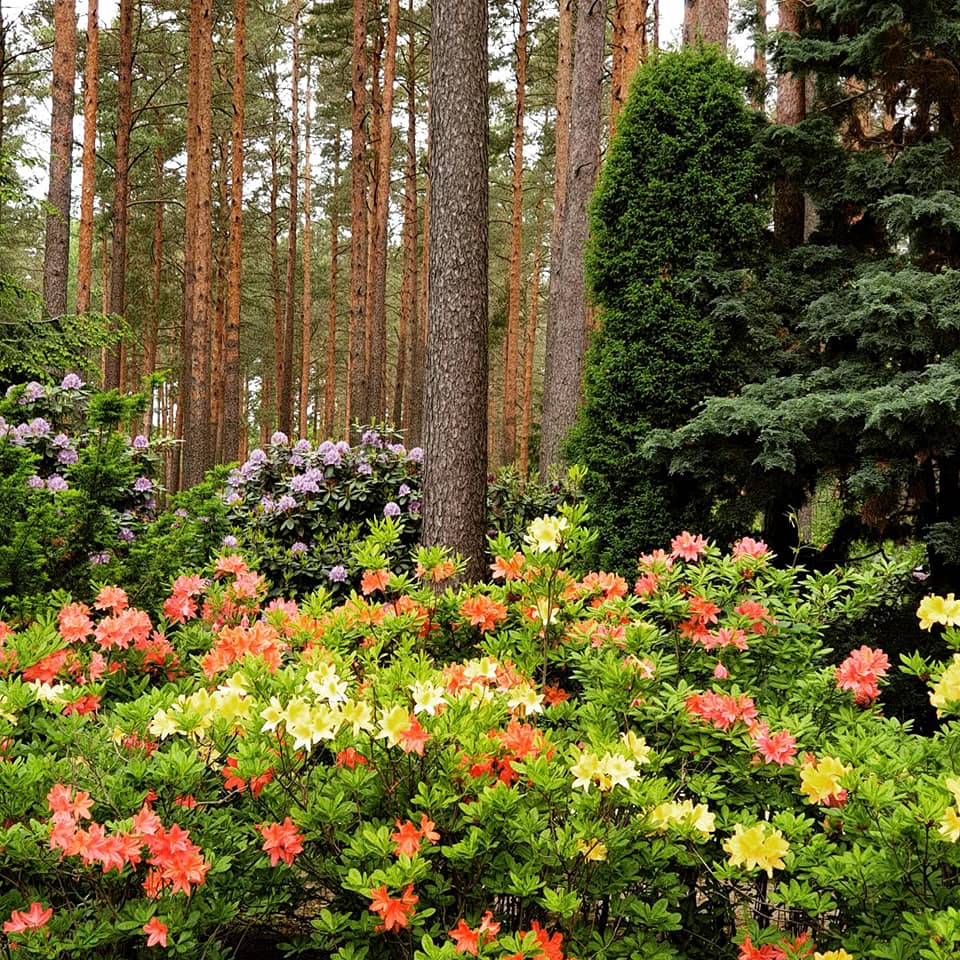
Tree nursery “Baltezers”
The Baltezers tree nursery has been established in Sabini, Adazi Municipality. The farm was established on the basis of the forest nursery, which was started in 1972 as part of the Inčukalns MRS. Its activities include the cultivation and sale of ornamental plants, but excursions are also offered to visitors. The nursery currently has more than 500 plant names in its assortment, which is expanded every year with new plants suitable for the Latvian climate zone.
The range includes conifers, deciduous trees and shrubs, vines, perennials and ornamental grasses.
Tours of the nursery grounds can be booked throughout the season, but in spring and summer must be booked at least 5 days in advance. Contact person – Varis Kazaks (phone: 29151190).
FB: https://www.facebook.com/baltezers.lv
Working hours: Closed during the winter season!
Hotel for pets “Kalndores”
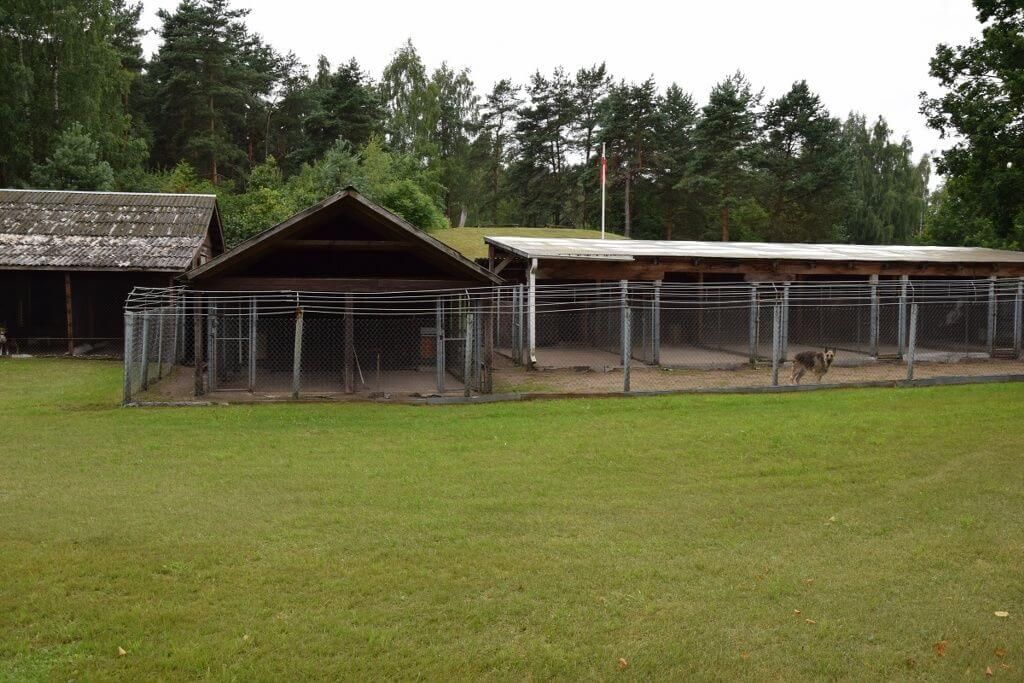
The Dog Hotel in Baltezers has been operating since June 1996 and is the first hotel of its kind registered in Latvia. Over the years, the hotel has welcomed dogs and cats from all over the world – Japan, Israel, USA, Germany, Scandinavia and other countries.
The hotel has a separate indoor and outdoor aviary (with roof and floor) for each dog/cat, as well as a large walking area where each dog is taken for a walk 3 times a day.
The hotel is certified and complies with all the requirements of the Cabinet of Ministers of the Republic of Lithuania.
Cycling route Ādaži – Lielais Baltezers